
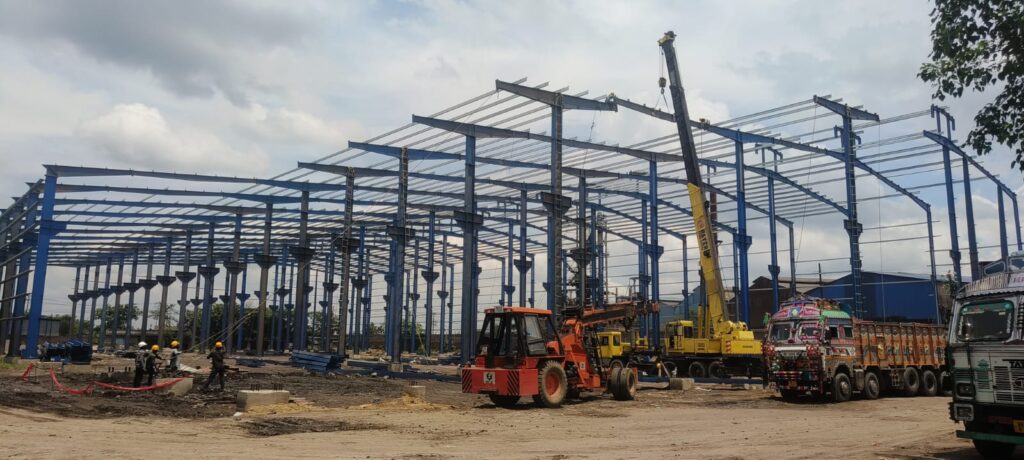
In today’s fast-paced construction environment, PEB fabrication—short for Pre-Engineered Building fabrication—has become a game-changer for industrial, commercial, and even residential projects. Its cost-effectiveness, quick turnaround, and structural reliability make it the preferred choice for warehouses, factories, showrooms, logistics hubs, and more.
But what exactly does PEB fabrication involve, and why is it transforming how we build?
In this article, we’ll break down the entire PEB fabrication process, its benefits, key components, and best practices for successful implementation.
🔧 What Is PEB Fabrication?
PEB fabrication is the process of designing, cutting, welding, and assembling steel structural components in a controlled manufacturing environment before delivering them to the construction site. These components are then bolted together on-site to form the complete structure.
Unlike conventional buildings, which require on-site welding and extended labor, PEBs are pre-fabricated off-site and installed quickly and efficiently with minimal waste and disruption.
🏗️ Key Components in PEB Fabrication
- Primary Frame Members
- Columns and rafters made of built-up I-sections or hot-rolled sections
- Designed based on load requirements using engineering software
- Secondary Members
- Purlins, girts, and eave struts
- Typically cold-formed steel, providing support to roof and wall sheeting
- Roof and Wall Panels
- Pre-painted galvanized sheets (PPGI), sandwich panels, or insulated cladding
- Protect the structure from external weather and enhance aesthetics
- Bracing Systems
- Cross bracings, portal frames, and rod bracing to ensure lateral stability
- Accessories
- Doors, windows, skylights, louvers, ventilators, gutters, and downspouts
⚙️ The PEB Fabrication Process
- Design & Engineering
- Structure is modeled using CAD and structural analysis software
- Load calculations and optimization performed for cost-effectiveness
- Material Procurement
- High-grade steel and materials sourced as per structural requirements
- Cutting & Welding
- CNC machines and automated plasma cutters ensure precision
- Components are welded according to design specifications
- Surface Treatment
- Shot blasting, priming, and painting to protect against corrosion
- Quality Inspection
- Rigorous checks for welding quality, dimensions, and finish
- Packaging & Dispatch
- Fabricated parts are labeled, packed, and transported to the site
- Site Erection
- Bolted connections allow rapid and safe assembly with cranes and minimal labor
✅ Benefits of PEB Fabrication
- Faster Construction Time
- Fabrication and erection are streamlined, reducing timelines by 30–50%
- Cost-Efficiency
- Saves on material waste, labor, and overhead costs
- High Precision
- Factory-controlled conditions ensure tight tolerances and consistent quality
- Durability
- Steel structures resist fire, corrosion, and environmental stress with proper coating
- Environmentally Friendly
- Reduced waste and recyclability of steel supports sustainability goals
🏢 Common Applications of PEB Fabrication
- Industrial warehouses and factories
- Cold storage and logistics parks
- Aircraft hangars
- Metro stations and toll plazas
- Commercial showrooms and outlets
- Agriculture storage buildings
Each project is custom-designed to meet functional needs and environmental conditions.
🎯 Best Practices in PEB Fabrication
- Work with experienced fabricators who offer in-house design and quality control
- Choose corrosion-resistant coatings for long-term protection
- Align fabrication and delivery timelines with your project schedule
- Request material certifications and test reports to ensure standards compliance
- Integrate insulation or solar-compatible roof options early in design phase
🧱 PEB Fabrication vs. Conventional Construction
| Feature | PEB Fabrication | Traditional Construction |
|---|---|---|
| Speed | Fast (weeks) | Slow (months) |
| Cost | Optimized | Higher labor/material cost |
| Waste | Minimal | Significant |
| Quality | Factory-controlled | Site-dependent |
| Flexibility | High | Medium |
🧩 Customizing Your PEB Fabrication Project
Modern PEBs are fully customizable:
- Clear spans up to 100 meters
- Mezzanine floors
- Crane beams and lifting systems
- Energy-efficient panels and skylights
- Custom branding with color-coated panels
Conclusion
PEB fabrication represents the future of efficient, economical, and eco-friendly construction. From warehouses to commercial complexes, pre-engineered buildings reduce construction time, enhance quality, and provide design flexibility without compromising on safety or performance.
If you’re planning a steel building project, investing in the right PEB fabrication partner is the key to success.